Korea's Cashless Society -- Living Without Cash in Everyday Life
South Korea has become a nearly cash-free society where almost everything can be done digitally. From KakaoPay and Toss to daily life scenes, here's a firsthand look at cashless living from a resident's perspective.
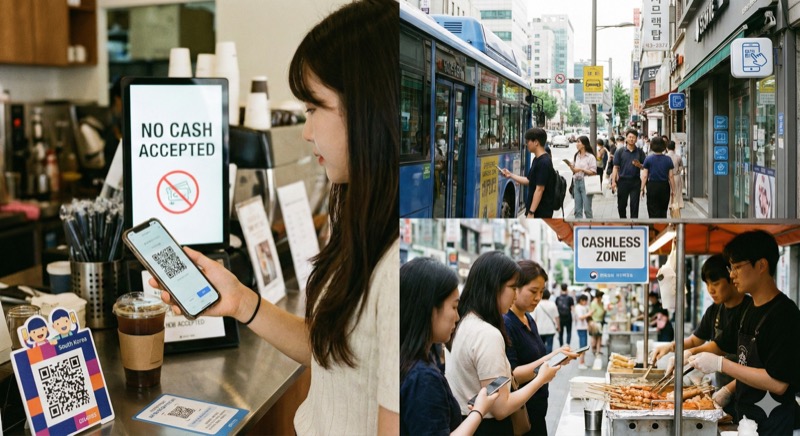
A friend visiting Korea once told me: "I brought cash in my wallet, but I couldn't find anywhere to spend it, so I took it all back home." It might sound like an exaggeration, but living here, I can confirm it's basically true. Korea has become a cashless society where you can handle nearly everything without paper money.
The US has been moving toward more digital payment options with Apple Pay, Venmo, and tap-to-pay credit cards, but Korea's situation is on a different level entirely. Today I want to share what cashless living actually looks like from the ground here in Seoul.
A Country Where You Don't Need a Wallet
The first thing you notice about living in Korea is that your smartphone can carry you through an entire day.
Buying coffee at the corner convenience store in the morning. Paying for lunch at a restaurant. Grocery shopping in the evening. It's all done on my phone. Even tiny street food stalls and hole-in-the-wall shops accept card or mobile payments. In fact, if you try to pay with cash, some places struggle to make change.
According to the Bank of Korea, cash usage has dropped to less than 10% of all transactions. Using a card to buy a single snack worth a few cents is completely normal here.
The Three Pillars of Korea's Cashless Society
Korea's cashless ecosystem rests on three main pillars.
1. Credit and Debit Card Culture
Korea's cashless story actually started long before smartphones. In the late 1990s, the government actively incentivized credit card usage, offering income tax deductions for card spending. For merchants, card transactions created transparent sales records that simplified tax compliance.
As a result, Korea became one of the countries with the highest per-capita credit card ownership in the world. While you might still occasionally encounter "cash only" shops in some countries, in Korea you'll find places that are "card only."
2. The Explosion of Easy-Pay Apps
Building on the card culture, smartphone-based payment apps took Korean cashless to the next level. Here are the major players:
KakaoPay -- This is built into KakaoTalk, Korea's dominant messaging app (think of it as Korea's equivalent of iMessage or WhatsApp, except essentially everyone uses it). Since almost every Korean uses KakaoTalk, KakaoPay requires no separate app install. Sending money to a friend is as simple as tapping "send" in a chat -- "Hey, send me your share of dinner" gets settled in seconds.
Toss -- Originally a simple money-transfer service, Toss has grown into a full financial platform with its own bank (Toss Bank), investment services, and insurance products. Its clean UI and intuitive design make it especially popular with people in their 20s and 30s. You can check account balances, trade stocks, and review your credit score -- all in one app.
Naver Pay -- Run by Naver, Korea's largest search engine and web portal (similar to what Google is in the US). It works for both online shopping on Naver and offline stores. Users earn Naver Points, making it attractive for anyone already in the Naver ecosystem.
Samsung Pay -- Built into Samsung smartphones, but with a unique advantage: it works with traditional magnetic-stripe card readers, not just NFC terminals. This means you can pay with your phone virtually anywhere that accepts cards, even at older payment terminals. It's one reason Samsung Pay has incredibly wide coverage in Korea.
3. The Evolution of Mobile Banking
Korea's mobile banking goes well beyond checking balances and making transfers. Internet-only banks like Kakao Bank and Toss Bank operate entirely through smartphone apps with no physical branches. You can open accounts, apply for loans, and send international transfers without ever visiting a bank.
Kakao Bank in particular saw explosive adoption right from launch. The ability to open an account in minutes, without the bureaucratic hassle of traditional banks, was a huge draw. Today, a significant percentage of Korean adults have at least one Kakao Bank account -- it's become a part of everyday life.
Cashless Scenes from Daily Life
Let me paint a more concrete picture of just how cashless Korea has become.
Transportation -- Public transit uses the T-money card system, but now you can also ride the subway and bus using your phone's NFC. Taxis can be hailed via the Kakao Taxi app, and when you arrive at your destination, payment processes automatically -- no need to pull out cash or a card.
Food Delivery -- Korea is one of the world's most delivery-oriented cultures. Apps like Baedal Minjok (literally "Delivery Nation") and Coupang Eats let you order food with payment completed entirely in-app. There's no exchange of cash with the delivery driver.
Traditional Markets -- "Don't you need cash at the market?" you might wonder. The Korean government has rolled out card payment terminals and a QR-based payment system called Zero Pay in traditional markets, bringing even small market vendors into the cashless fold. There are still some stalls that prefer cash, but fewer every year.
Splitting the Bill -- In many Western countries, splitting the check might involve everyone pulling out their cards or using Venmo. In Korea, one person pays the full bill with their card, and everyone else instantly sends their share via KakaoPay or Toss right in the group chat. The whole process takes seconds.
Why Korea Is Further Along
The US and other Western countries have been moving toward cashless payments, but Korea feels noticeably further ahead. Several factors help explain why.
Fewer competing systems. The American payment landscape is fragmented -- Apple Pay, Google Pay, Venmo, Zelle, Cash App, PayPal, plus various store-specific apps. In Korea, credit cards work virtually everywhere, and two main platforms (KakaoPay and Naver Pay) dominate mobile payments, reducing confusion.
Active government policy. The Korean government has been promoting card usage since the 1990s with tax incentives for consumers. These financial rewards were a powerful motivator for both consumers and merchants.
Cultural shift away from cash. While some cultures maintain a strong preference for physical cash as "more real" or "more secure," Korean culture has shifted decisively toward seeing cash as inconvenient. Carrying bills and coins is increasingly viewed as unnecessary hassle.
The Downsides of Going Cashless
Of course, it's not all upside.
Elderly people who aren't comfortable with digital devices can find themselves left behind in a cashless environment. This is a recognized social issue in Korea, and the government and local authorities run digital literacy programs for seniors. There's also the risk that a dead phone battery means you literally can't pay for anything. I always carry a portable charger when I go out.
Privacy concerns are real, too. When every transaction is recorded digitally, your entire spending pattern becomes data. Balancing convenience with privacy is an ongoing challenge that cashless societies will continue to grapple with.
Summary
Living in Korea, I honestly can't remember the last time I used cash. That's how deeply cashless payment has penetrated everyday life here.
The trend toward cashless is certainly growing worldwide. Korea's experience may not be a perfect blueprint for every country, but it offers a real-world look at what "life without cash" actually feels like.
If you're planning a trip to Korea, here's one piece of advice: bring minimal cash and make sure you have a Visa or Mastercard. That alone will get you through almost everything in Korea.