Korea's Military Service -- The Reality of Mandatory Conscription
From how the draft works to what military life is really like and its impact on society -- a detailed look at South Korea's mandatory military service system.
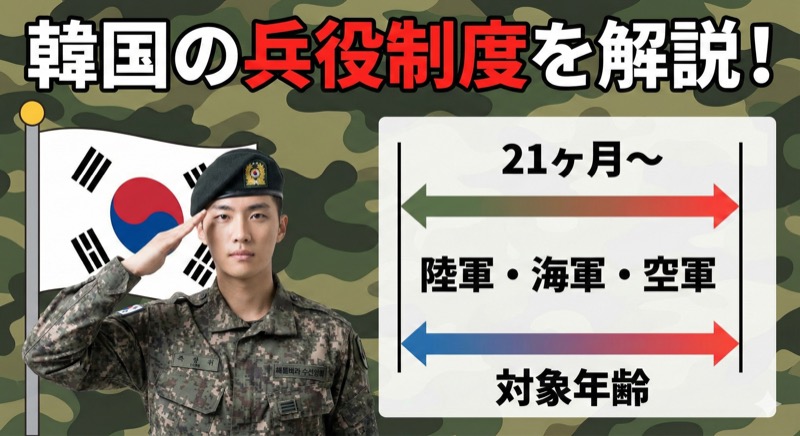
For Korean men, military service is an unavoidable rite of passage. Unlike the United States and most Western countries, where military service is voluntary, South Korea maintains mandatory conscription to this day. In this article, I'll cover the basics of Korea's draft system, what military life is actually like, and how it shapes Korean society and culture.
1. The Basics -- Who Serves, When, and For How Long?
All Korean males become eligible for military duty at age 18 and typically enlist between the ages of 19 and 28. Most college students take a leave of absence during their first or second year to serve.
Service Periods (as of 2025)
| Branch | Duration |
|---|---|
| Army / Marine Corps | 18 months |
| Navy | 20 months |
| Air Force | 21 months |
The Army used to require 21+ months, but the duration has been gradually reduced. Still, it amounts to roughly 1.5 to 2 years spent in the military.
2. From Enlistment to Discharge -- The Flow of Military Life
Basic Training (Hullyeonso) -- The First 5 Weeks
Upon enlistment, new recruits go through basic military training at a facility called the hullyeonso. This involves physical conditioning, rifle training, and learning the fundamentals of group discipline. Cell phones are confiscated, and the only contact with the outside world is through letters. For young Koreans, these first 5 weeks are widely considered the hardest part.
Unit Assignment (Jadae Baechi)
After completing basic training, soldiers are assigned to their units. This is where real military life begins. They're assigned roles as infantry, artillery, communications, and various other specialties.
The Rank System
Enlisted soldiers progress through four ranks:
| Rank | Korean | Approximate Timeline |
|---|---|---|
| Private | Ideungbyeong | Enlistment to ~3 months |
| Private First Class | Ildeungbyeong | ~3 to ~7 months |
| Corporal | Sangdeungbyeong | ~7 to ~13 months |
| Sergeant | Byeongjang | ~13 months to discharge |
As a Private, you're at the bottom and spend your days following orders from senior soldiers. As a Sergeant, you take on a mentoring role for junior soldiers, and with discharge approaching, life becomes relatively more relaxed.
3. What Military Life Is Actually Like
Pay
Military pay was notoriously low for decades, but it has been raised significantly in recent years. As of 2025, a Sergeant earns about 1.25 million won (~$870 USD) per month. Considering that pay used to be only a few hundred dollars, this is a major improvement.
Food
Military food has long carried a reputation for being terrible, but things have improved considerably. Some units have adopted buffet-style dining halls, and menus have become more diverse.
Cell Phone Access
Starting around 2020, soldiers were allowed to use personal cell phones during off-duty hours on weekdays and on weekends. This was a major cultural shift -- it made staying in touch with family and friends much easier and has helped reduce the psychological burden of service.
Leave
During their service, soldiers receive a total of about 25-30 days of leave. This includes holiday leave (Lunar New Year, Chuseok), regular leave, and merit-based leave. Near the end of service, there's a "pre-discharge leave" that effectively lets soldiers go home a few days before their official discharge date.
4. Alternatives and Exemptions
Alternative Service
Not every man serves as an active-duty soldier.
- Social Service Workers (Sahoe Bokmuyowon): Those who don't pass the physical for active duty serve at public institutions for about 21 months
- Industrial Technical Personnel: Work in designated industries while fulfilling their military obligation
- Arts and Sports Personnel: Olympic medalists and Asian Games gold medalists who have brought honor to the country can receive reduced or exempted service
BTS and Military Service
The members of BTS enlisting one by one made global headlines. The fact that even Korea's biggest superstars serve without exception underscores just how seriously Korean society takes military service.
5. How the Military Shapes Korean Society
A Shared Experience
Since virtually all Korean men have served, the military is a universal conversation starter that transcends generations. "Which unit were you in?" and "What year did you enlist?" are standard getting-to-know-you questions among Korean men.
Reinforcing Hierarchical Culture
Korea's strict seniority-based social hierarchy is intensified by military experience. The rigid chain of command during service is widely believed to carry over into workplace culture after discharge.
The Gender Divide
Because only men are required to serve, military service is a source of ongoing debate between genders. The argument that "men are forced to lose roughly two years of their career" has become particularly vocal among younger generations.
Portrayal in Media
Korean dramas and movies frequently feature military settings. Shows like Descendants of the Sun and D.P. (about military deserter chasers) have gained international popularity and offer a window into Korean military culture.
Summary
Korea's military service system is more than a national defense mechanism -- it's a foundational element that shapes Korean men's identities and the broader social fabric. Understanding it gives you much deeper insight into Korean society and the people within it.
If you have Korean friends or colleagues, ask them about their military experience sometime. You're almost guaranteed to hear some fascinating stories.