A Complete Guide to Korean Money (Won, ₩) -- What You Need to Know Before Your Trip
Everything about Korean won -- from the basics of bills and coins to real-world price sense and currency exchange tips. A practical guide from a dad living in Seoul.
Hi, I'm hitechpapa.
One of the first hurdles when planning a trip to Korea is figuring out the money. Korea's currency is the won (won, ₩), and the denominations look very different from US dollars -- the numbers are much bigger, which can be confusing at first. "How much is 10,000 won?" "Is 50,000 won a lot?" -- getting these questions sorted before you go will make shopping and dining much smoother once you arrive.
Today, I'll break down Korean money from the basics to practical price sense, based on my own experience living here.
Korean Currency Basics -- Coins and Bills
Korea's currency unit is the won (₩). Here's what's currently in circulation:
Coins: 10 won, 50 won, 100 won, 500 won
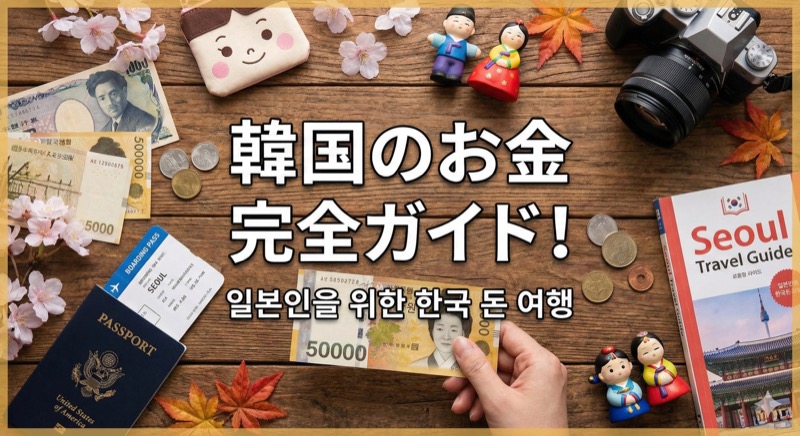
Bills: 1,000 won, 5,000 won, 10,000 won, 50,000 won
There are technically 1-won and 5-won coins, but they've virtually disappeared from everyday use. For all practical purposes, the smallest unit is 10 won.
The largest bill is the 50,000-won note. It's roughly equivalent in role to a $50 bill and was first issued in 2009, making it relatively new. It features Shin Saimdang, a renowned female artist from the Joseon Dynasty.
Exchange Rate -- The Quick Mental Math
The simplest way to convert Korean won to US dollars in your head:
1,000 won ≈ roughly $0.70 USD (this fluctuates, but it's a handy ballpark)
An even easier rule of thumb: divide by 1,400 for a rough dollar amount, or just remember these benchmarks:
- 1,000 won → ~$0.70
- 5,000 won → ~$3.50
- 10,000 won (manwon) → ~$7
- 50,000 won (omanwon) → ~$35
Exchange rates change daily, of course, but keeping these rough conversions in mind will help you quickly gauge prices on the ground.
What Things Actually Cost in Korea
Numbers alone don't tell the full story, so here's what different amounts of won actually buy:
1,000 won (~$0.70) gets you:
- A bottle of water at a convenience store
- Close to a basic public transit fare (subway/bus is about 1,400 won)
- A cup of vending machine coffee
5,000 won (~$3.50) gets you:
- A roll of kimbap (Korean rice roll) plus a drink
- A convenience store lunch box
- A serving of tteokbokki (spicy rice cakes)
10,000 won (~$7) gets you:
- A full meal at an everyday restaurant (kimchi stew, soybean paste stew, bibimbap, etc.)
- Two Americanos at a cafe
- A short taxi ride
50,000 won (~$35) gets you:
- Samgyeopsal (Korean BBQ pork belly) for two plus drinks
- A Korean set meal (hanjeongsik) for one
- A one-way KTX (bullet train) ticket from Seoul to Daejeon
So a typical restaurant meal runs about $7-10, which is comparable to or slightly cheaper than similar meals in the US, though Korean prices have risen noticeably in recent years.
Bills and Coins -- Quick Tips
A few things that often trip up visitors:
Watch out for the 500-won coin. The Korean 500-won coin is similar in size to the old Japanese 500-yen coin, which led to fraud issues in the past. But in terms of value, 500 won is only about $0.35 -- far less than its size might suggest.
Bills are color-coded for easy identification:
- 1,000 won → Blue
- 5,000 won → Orange/Brown
- 10,000 won → Green
- 50,000 won → Yellow
The large numbers on Korean bills can be overwhelming at first, but once you associate each denomination with its color, pulling out the right bill becomes second nature.
You Actually Barely Need Cash
After all that explanation about Korean money, here's the honest truth: you barely need cash in Korea.
Korea is one of the most cashless societies in the world. Convenience stores, cafes, restaurants, taxis, and even most street food vendors accept card payments. It's not unusual for Koreans to carry zero cash in their wallets.
As a visitor, a Visa or Mastercard will work at the vast majority of places. That said, some traditional markets and very small shops may be cash-only, so it's wise to keep about 30,000-50,000 won (~$20-35) on hand just in case.
For currency exchange, rates tend to be better at exchange offices in Seoul (especially in Myeongdong and Hongdae) than at Incheon Airport. You might also look into WOWPASS, a prepaid card designed for foreign tourists that includes built-in currency exchange features.
In Summary
Three things to remember about Korean money:
First, use a quick conversion rule -- roughly divide won by 1,400 to get US dollars, or just memorize that 10,000 won is about $7.
Second, anchor on 10,000 won ≈ $7. With that benchmark, you can quickly evaluate most prices.
Third, bring a card, not cash. Korea is a cashless powerhouse, and a single credit card will cover almost everything you need.
The big numbers on Korean won can be startling at first, but you'll get comfortable with them after just a purchase or two. I hope this guide helps you feel more prepared for your trip to Korea.
Next time, I'll share some practical tips on making payments while in Korea!