AI Footprints Are Showing Up in Google Analytics — What It Means for Site Owners
ChatGPT and Perplexity visits are appearing in my Google Analytics data. Reflections on the changing landscape of site management in the AI era.
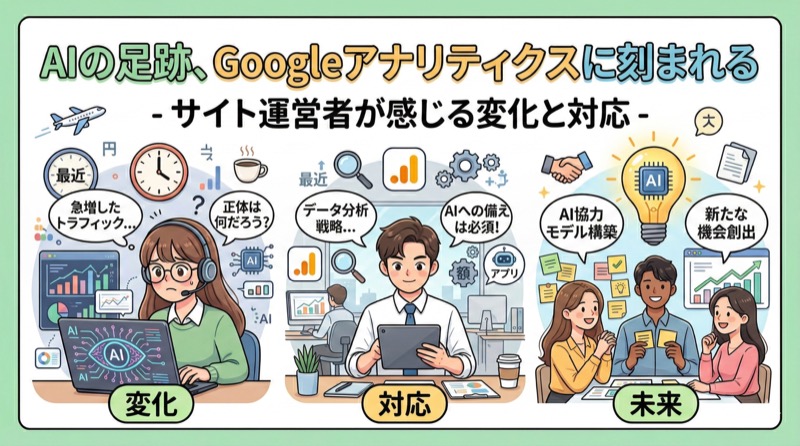
When you run a website, Google Analytics becomes a tool you check almost every day. Which articles are getting traffic, what's the average time on page, where are visitors coming from — it plays a crucial role in shaping my content strategy.
But recently, I started noticing data I'd never seen before. AI services had visited my site, and the visits were being recorded in Analytics.
ChatGPT and Perplexity — Why Are They Visiting My Site?
While reviewing my traffic sources, I discovered visit records from ChatGPT and Perplexity AI. I was surprised at first. Having non-human AI visit your site is a novel experience.
Of course, search engine bots like Googlebot and other crawlers visit sites all the time. But these records were different in nature. They indicate that AI chatbots referenced my site while generating answers to user questions.
There are two likely explanations. First, the AI performed real-time web searches while generating a response and referenced my site's content in the process. ChatGPT's browsing feature and Perplexity's real-time search function fall into this category.
Second, the AI displayed my site's URL as a source citation, and the user clicked through to visit directly. Perplexity clearly shows source links alongside its answers, so users may have clicked through wanting more detail.
The First Scenario Is Concerning; The Second Is an Opportunity
If AI itself is visiting the site in a crawling-like fashion, that's somewhat worrying from an operator's perspective. AI extracts only the information it needs very quickly, which likely means extremely short dwell times. If these visits increase, they could drag down site engagement metrics. Worse, carefully crafted content might get absorbed into AI-generated answers, reducing direct visits to the actual site.
On the other hand, if AI provides source links and users click through to visit directly, that represents a brand-new traffic channel. Beyond traditional Google search, social media shares, and other search engines, AI chatbots have joined as a referral source. If you have quality content, AI-driven traffic could grow substantially — and that's a clearly positive signal.
The World Changed Again in Just Three Years
Just three years ago, this scenario was unimaginable. ChatGPT launched in late 2022, and the pace of AI advancement since then has been staggering.
I recently read an article noting that the number of users who type keywords into search engines and click on results has dropped significantly. "Zero-click searches" are on the rise. Google itself now provides direct answers on the search results page through AI Overviews, and more people are using AI tools to get answers without going through search engines at all.
Until now, the core strategy for site management was SEO — figuring out how to rank higher in search results was the centerpiece of any content strategy. But if people are no longer clicking on search results, the very meaning of ranking high starts to change.
What It Means to Run a Site in the AI Era
In the midst of these changes, a few things come to mind.
Content quality matters more than ever. If AI is selecting which content to reference from the vast ocean of information on the web, it stands to reason that accurate, in-depth articles will be the ones chosen. Surface-level information won't cut it — content packed with real experience and expertise will be valued by both AI and human readers. Structuring content clearly and backing it with accurate data, making it easy for AI to cite as a source, could itself become a strategy.
Don't rely on a single channel. Anyone who's had a platform's policy change wipe out everything they'd built can relate to this. Depending solely on search engine traffic is the same risk. AI-driven traffic, social media, newsletters, communities — diversifying your traffic sources is becoming an increasingly critical strategy.
Of course, search engine traffic hasn't disappeared entirely. Many people still use Google and other search engines to find and visit sites. But the declining share is an undeniable trend, and the gap between those who prepare for this shift early and those who don't will only widen over time.
What Changes in Another Three Years?
If the changes from 2022 to 2025 were this dramatic, predicting what the next three years will bring is nearly impossible. Perhaps AI will become both the creator and distributor of content. Perhaps entirely new forms of information consumption will emerge.
What's certain is that change will continue, and the pace is accelerating. What we can do now is keep creating quality content, embrace new trends with an open mind, and be ready to pivot when necessary.
The AI visit records in my Google Analytics might be small harbingers of much bigger changes to come. The time to recalibrate will arrive again. Being the kind of person who prepares gradually for that moment seems like the smart play — that's what I'm thinking as I review my Analytics data today.