Can AI Help You Build Hardware Devices, Not Just Software?
After experiencing AI's potential in software, I'm diving into hardware development with Raspberry Pi and Arduino. The beginning of a dev journal on building custom devices with AI.
AI in Software — I've Seen the Potential Firsthand
After months of working with AI, one thing has become crystal clear: in the software world — this digital space where you're staring at a monitor — AI can help you bring virtually any idea to life.
Building a website is no big deal anymore. Spend an hour or two chatting with AI in plain language, and you'll have a surprisingly polished website. No need to write code line by line. Just say "I want this feature," "put a button here," "change this color" — and AI writes the code automatically. This would have been hard to imagine just a year ago.
Server-based applications were the same story. Of course, AI doesn't do literally everything for you. But it guides you — "try this," "run this command" — and as you follow along step by step, a working service actually comes together. Domain connection, server deployment, API integration — all of it. The fact that I did it with my own hands still amazes me.
But What About Hardware?
Having fully experienced AI's potential in software, a question started nagging at me — something I wanted to try.
"Can I use AI to develop with Raspberry Pi and Arduino and actually build my own devices?"
Software lives entirely on screen. Write code, run it, see the result instantly. But hardware is different. You have to physically connect components, solder things together, and verify that sensors are actually working. It happens outside the screen, so there might be limits to how much AI can help.
Still, I decided to go for it. When I thought about it, there are definitely areas where AI can assist with hardware development. How to design circuits, which sensor goes on which pin, how to write the driver code — AI can absolutely guide the knowledge side of things. If I split the work between what my hands need to do and what AI's brain can handle, I should be able to create something.
I Bought the Gear
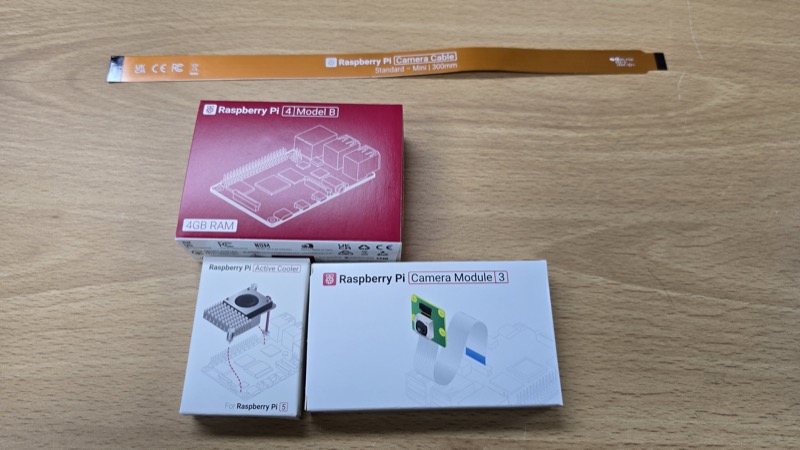
Once I made up my mind, I acted fast. I picked up a Raspberry Pi 4 and an Arduino Uno. I also ordered a learning kit for the Arduino — it comes with various sensors, LEDs, motors, and more. Apparently it's the perfect starter package.
One thing I noticed when buying the Raspberry Pi: prices have actually gone up compared to a few years ago. Semiconductor supply issues and rising memory costs seem to be the main factors. The Raspberry Pi used to be known as "the $35 computer," but now it requires a bit more investment. Still, compared to a regular PC it's very affordable, and considering what you can do with it, it's well worth it.
Starting My Own Dev Journal
From today, I'm going to document this journey step by step. Think of it as my own personal development lab notebook. I'll record everything — chatting with AI to design circuits, writing code, assembling actual devices, and testing them.
Since I already have experience doing software development with AI, I plan to take the same approach with hardware. When I don't know something, I'll ask AI. Follow its guidance. If it doesn't work, ask again. Through that cycle of iteration, I believe something will come to life.
The end goal isn't just blinking an LED — I want to build devices that are actually useful. An AI camera-based classification system, IoT sensor monitoring devices, things like that. I want to extend the possibilities that started in software all the way into the hardware world.
So can AI really help me build my own devices? I'm setting out to find the answer myself, starting today.